Rev 6
Electric Autonomous Rover · ENGR 7B
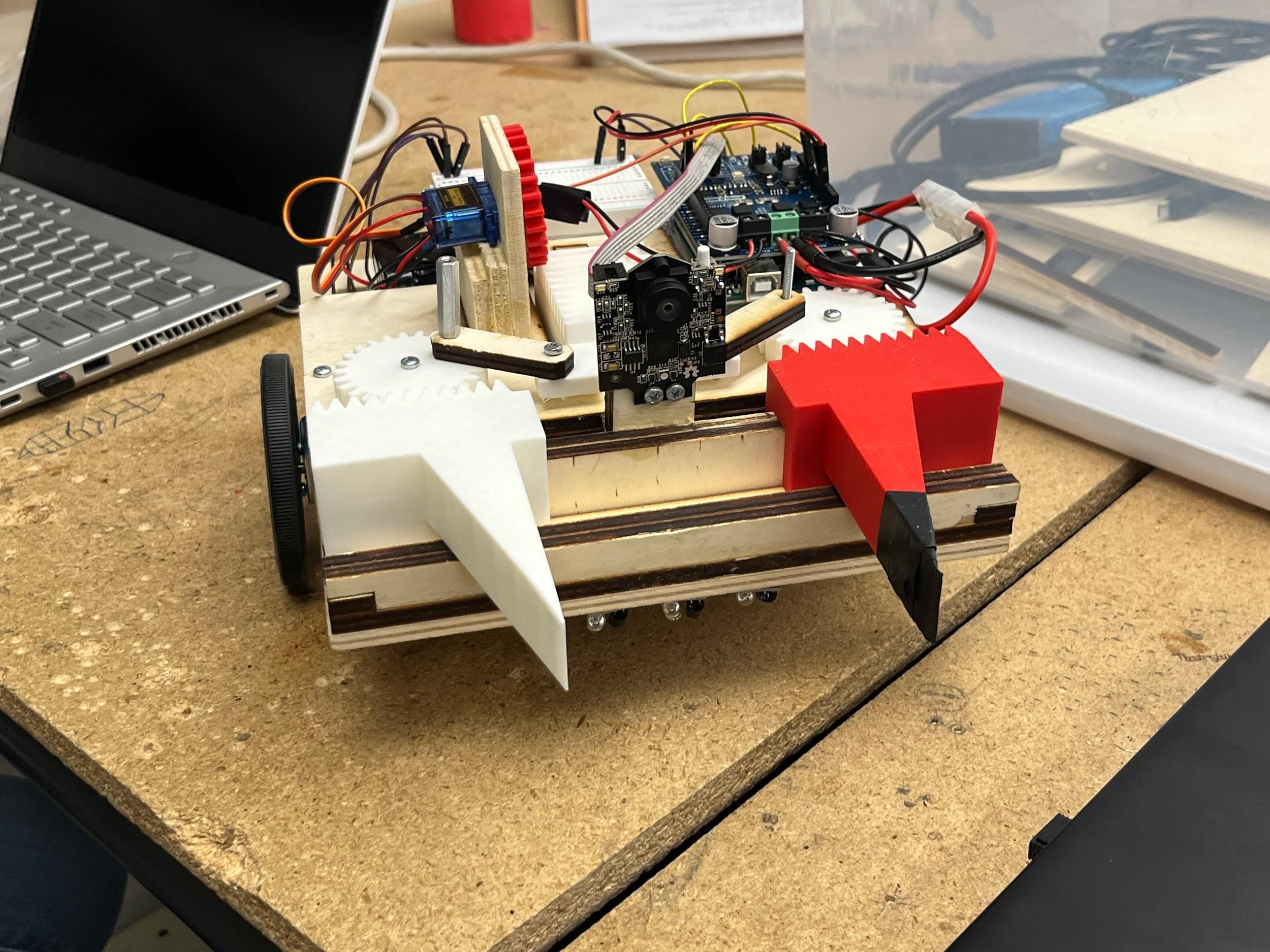
Rev 6: Final Build (3D-Printed Claw, Pixy2, Birch Chassis)
Objective
Over a 10-week quarter, our six-person team designed, fabricated, and tested an autonomous rover from scratch for a class competition. The rover had to follow a black line through a course and then use a custom claw to pick up a color-coded can, all autonomously, using an Arduino, IR sensors, and a Pixy2 camera.
My Role
I led the CAD and fabrication efforts. I drove the conceptualization and development of the rover's key components, centered on a unique double rack-and-pinion claw mechanism, then laser-cut, 3D-printed, and assembled the build and helped develop the control code. In total the project took roughly 50 hours of CAD and 30 hours of fabrication, coding, and troubleshooting.
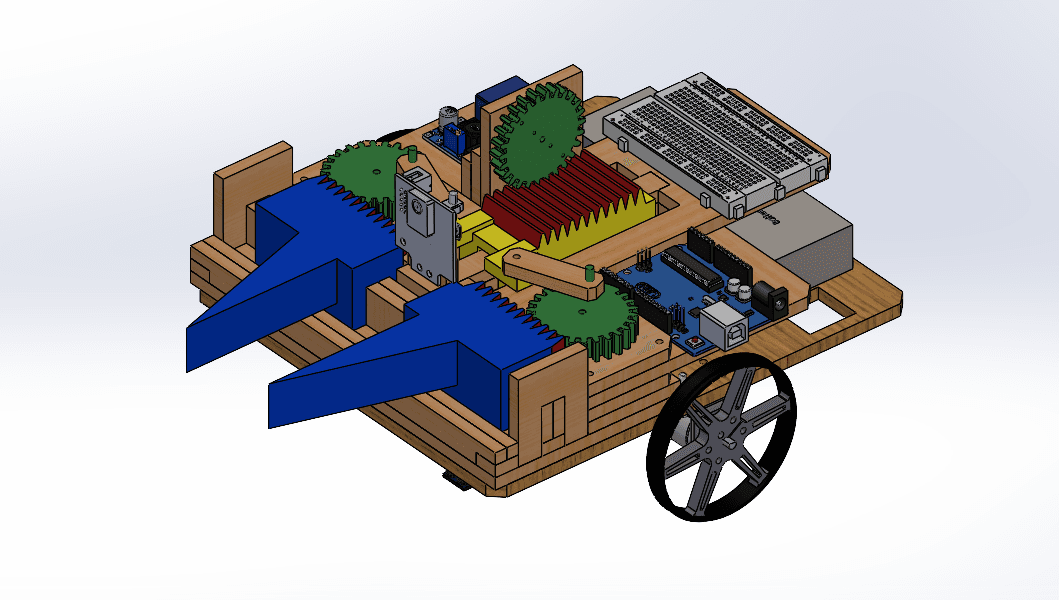 Final CAD Assembly (SolidWorks)
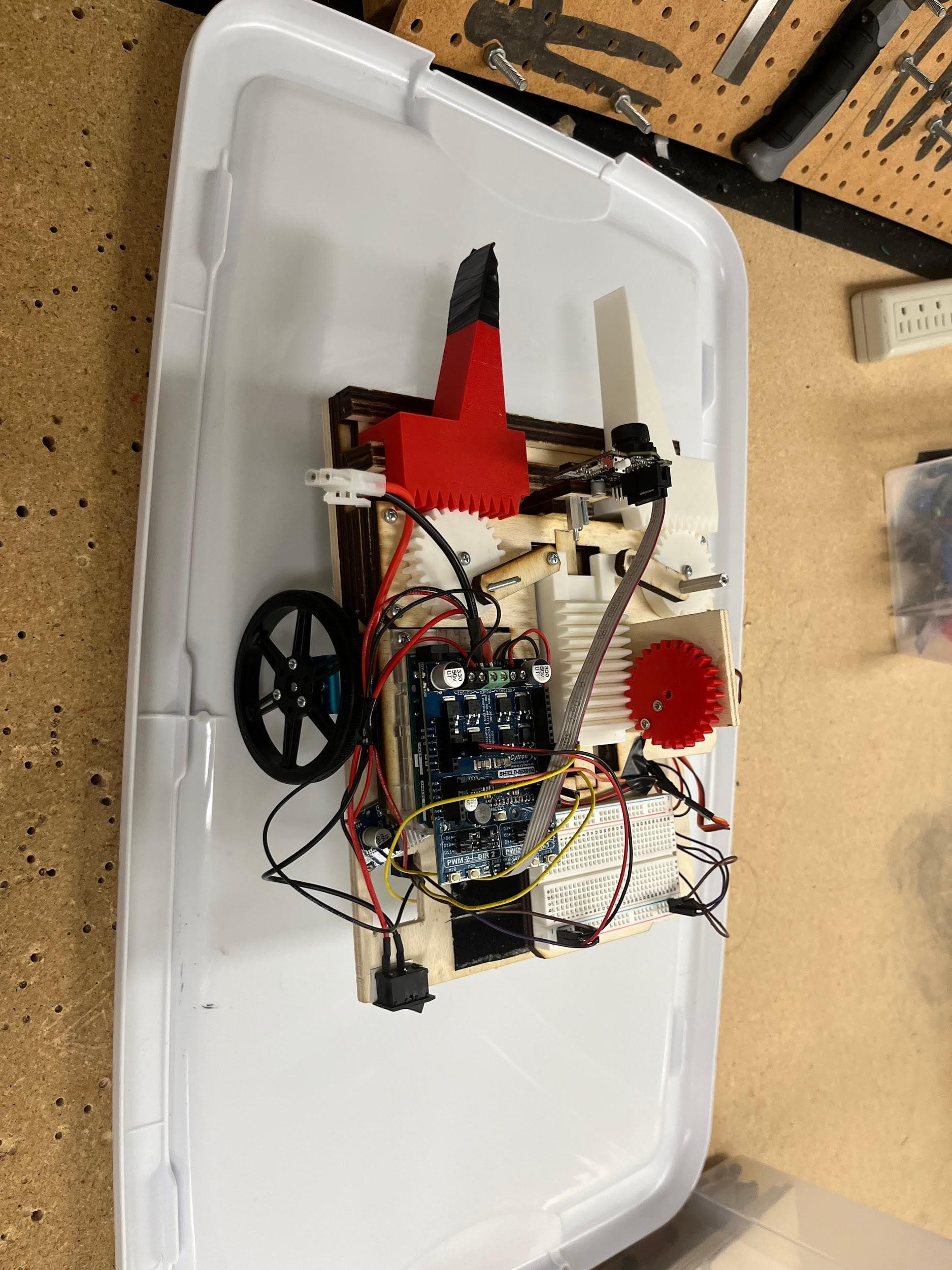 Assembled Rover (Top View)
Rover at a Glance
Core Contributions
Claw Mechanism (CAD)
Conceived and modeled a double rack-and-pinion claw from scratch (including custom gears) over ~20 iterations.
Main Chassis (CAD)
Designed the chassis to mount the motors, IR sensors, electronics, and claw platform, with an adjustable IR-sensor slot.
Fabrication Lead
Laser-cut the claw platform and 3D-printed the claw, then assembled the build using Lego-like slot joints for precise gluing.
Code & Troubleshooting
Helped develop the Arduino control code and debug the rover until it completed every part of the course.
Double Rack & Pinion
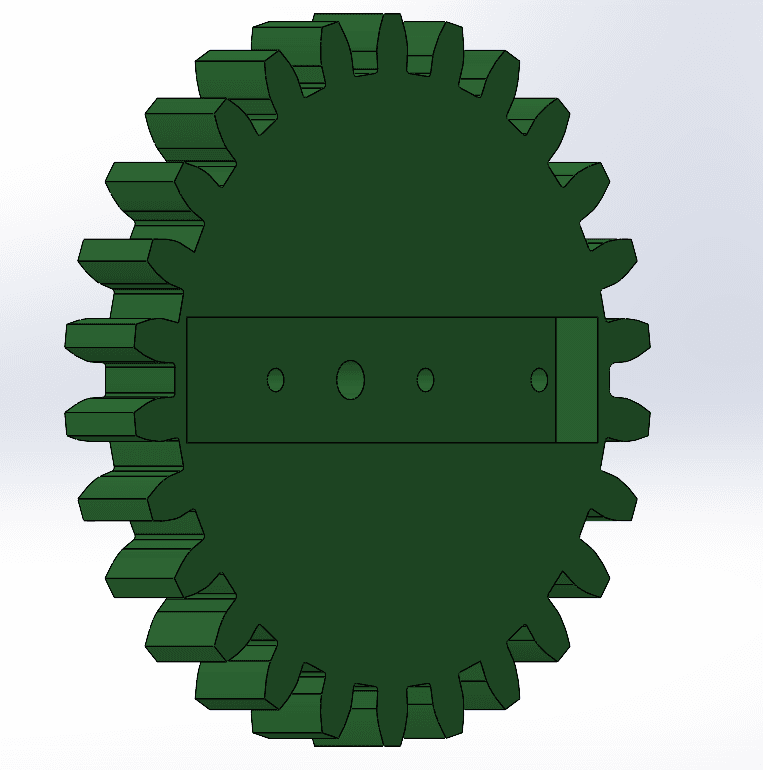
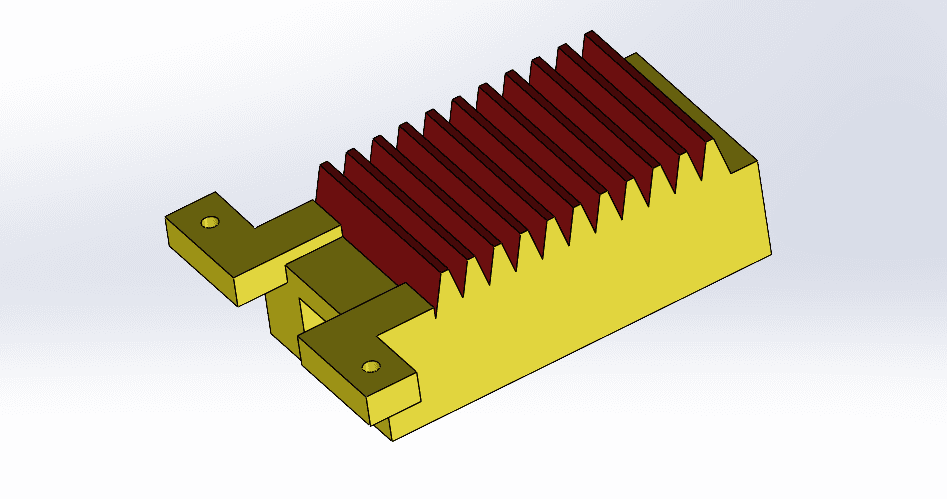
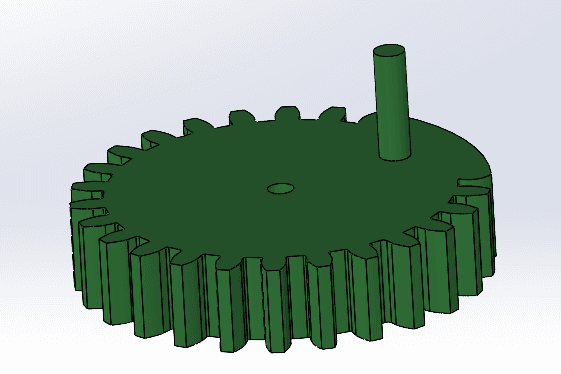
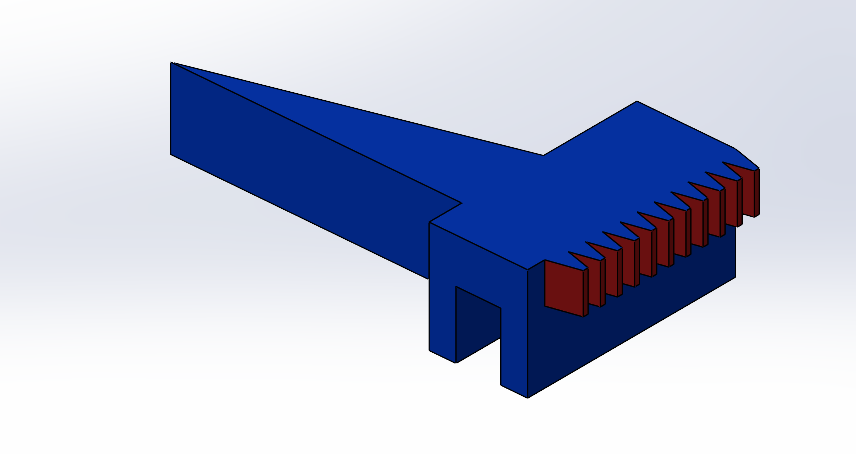
The claw is driven by a single micro servo, yet it moves two claw pieces in unison. A pinion gear on the servo drives a central rack; that rack pushes two linkages, which rotate two platform gears; each platform gear then drives a mini-rack built into its claw piece. In effect, one rack-and-pinion stage feeds two more, converting the servo's rotation into clean, symmetric horizontal motion.
Because no off-the-shelf linkage components were allowed, the gears were modeled from scratch using basic gear theory (15 diametral pitch, 26 teeth, 14.5° pressure angle). The geometry was unforgiving: the linkage's 1.4" hole spacing had to be exact to keep the platform gears in constant contact with the claw pieces, and the design was capped so the rack could never push the linkages past parallel.
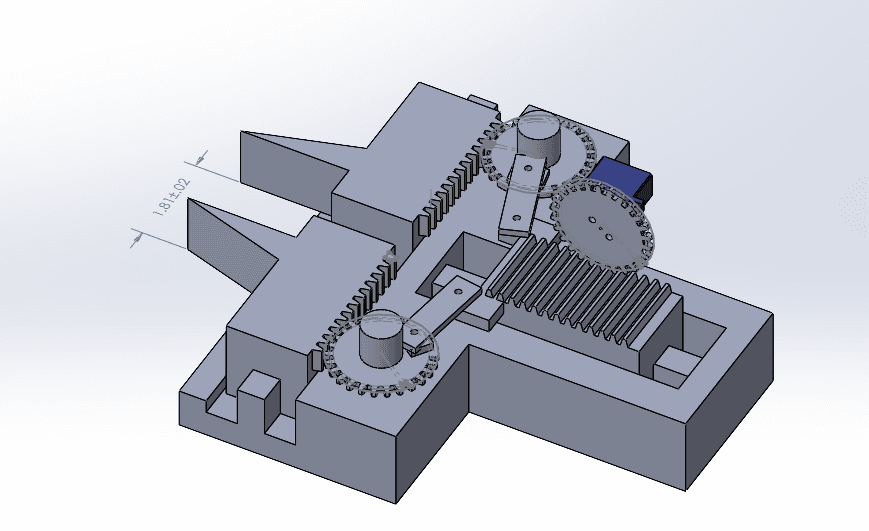 Claw Subassembly (CAD)
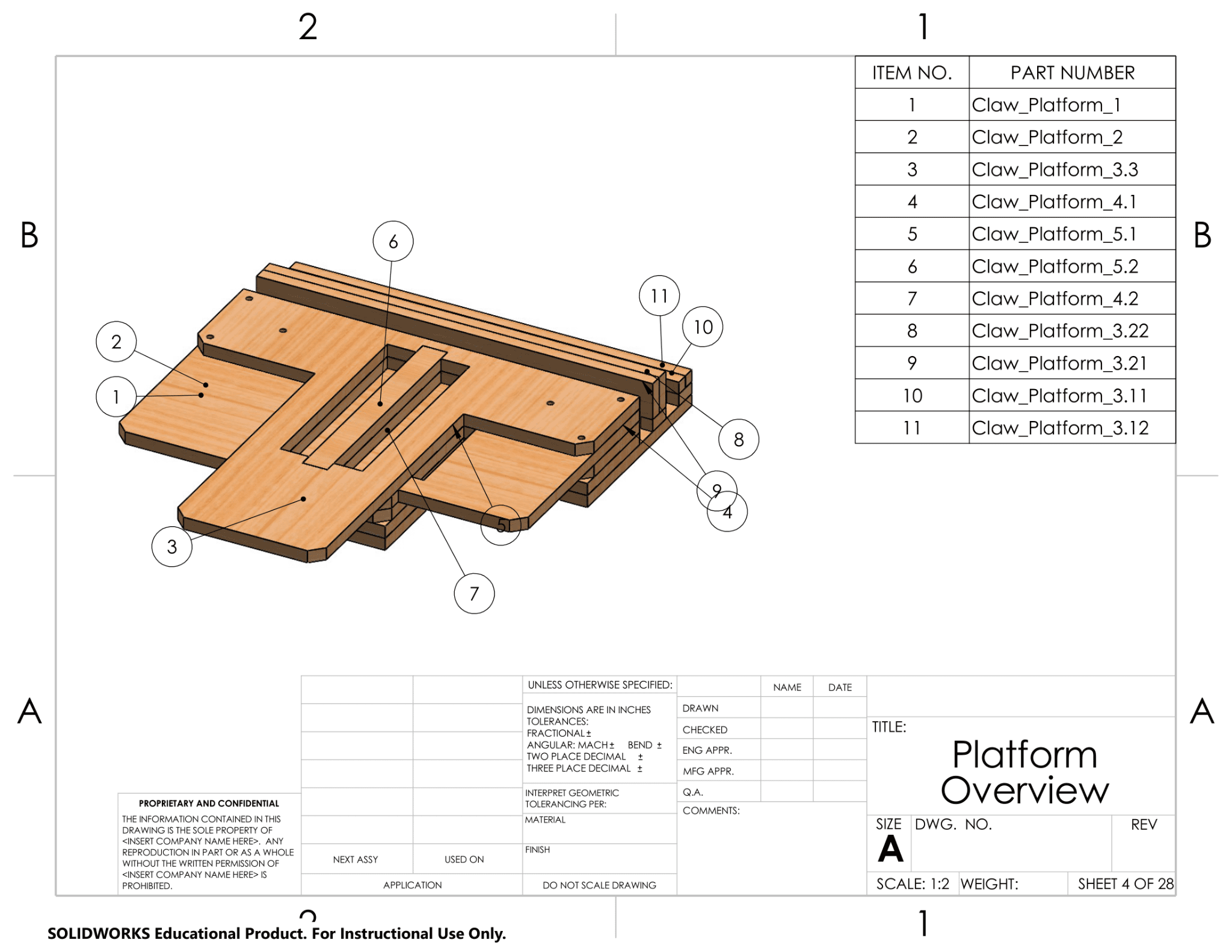 Claw Platform: Layered Part Breakdown
From One 3D Print to a Wooden Stack
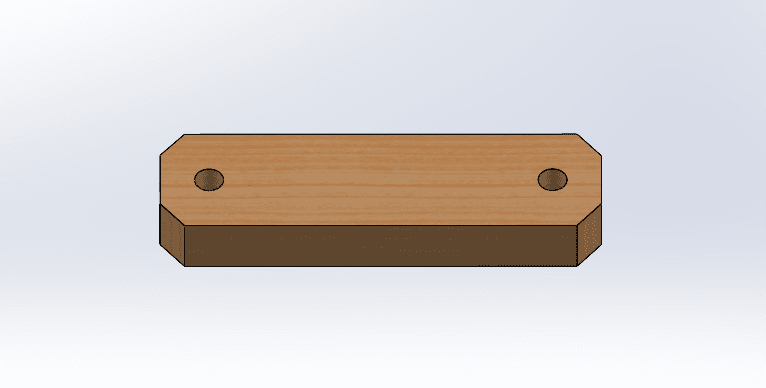
The platform that houses the mechanism was originally a single 3D-printed piece. Budget and print constraints forced a redesign: it became eleven laser-cut birch pieces stacked five layers tall (1.25").
I added indentation slots to the mating pieces so they self-aligned and bonded like a Lego set, maximizing glue surface area and keeping parts from shifting while curing. Later iterations also extended the top layers to create a second deck for electronics, shrinking the overall footprint and making the rover more agile.
Custom-Modeled Components
Main Chassis
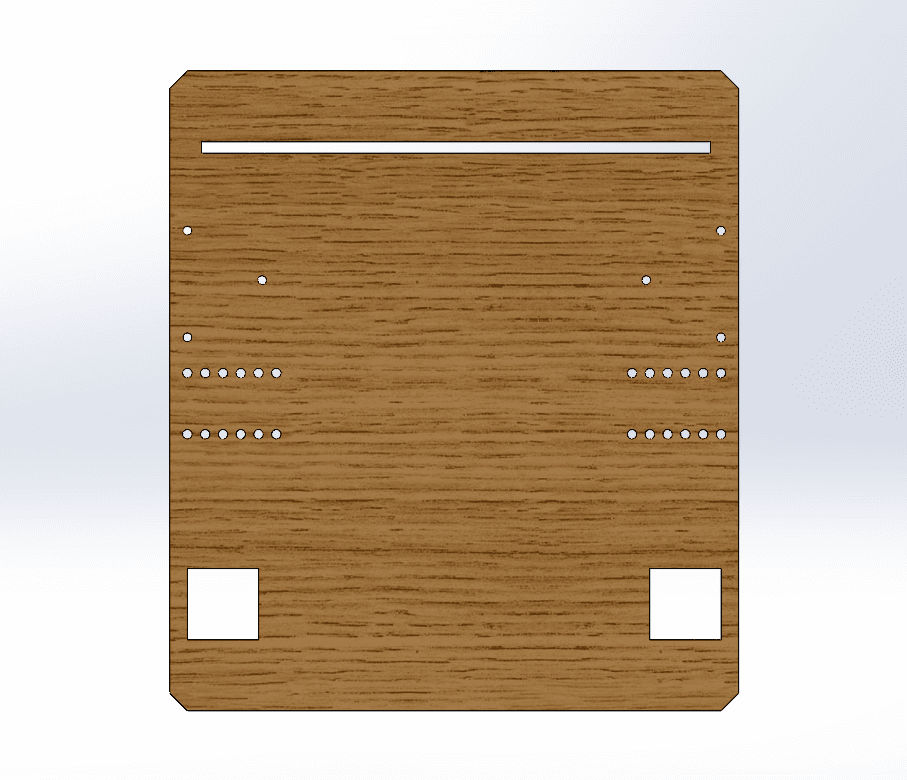
With the claw driving the layout, the chassis was built around it: a single birch plate carrying the two drive motors, IR sensors, battery, electronics, and the claw platform. The motors sit ~4.7" back so a rear caster wheel could be added for stability and tighter turning.
My favorite detail is a rectangular slot at the front: the IR sensors bolt through it, so they can be slid horizontally and re-tightened. That small adjustability feature turned out to be invaluable during line-following tuning.
 Main Chassis (CAD)
 Wiring Diagram
Electronics
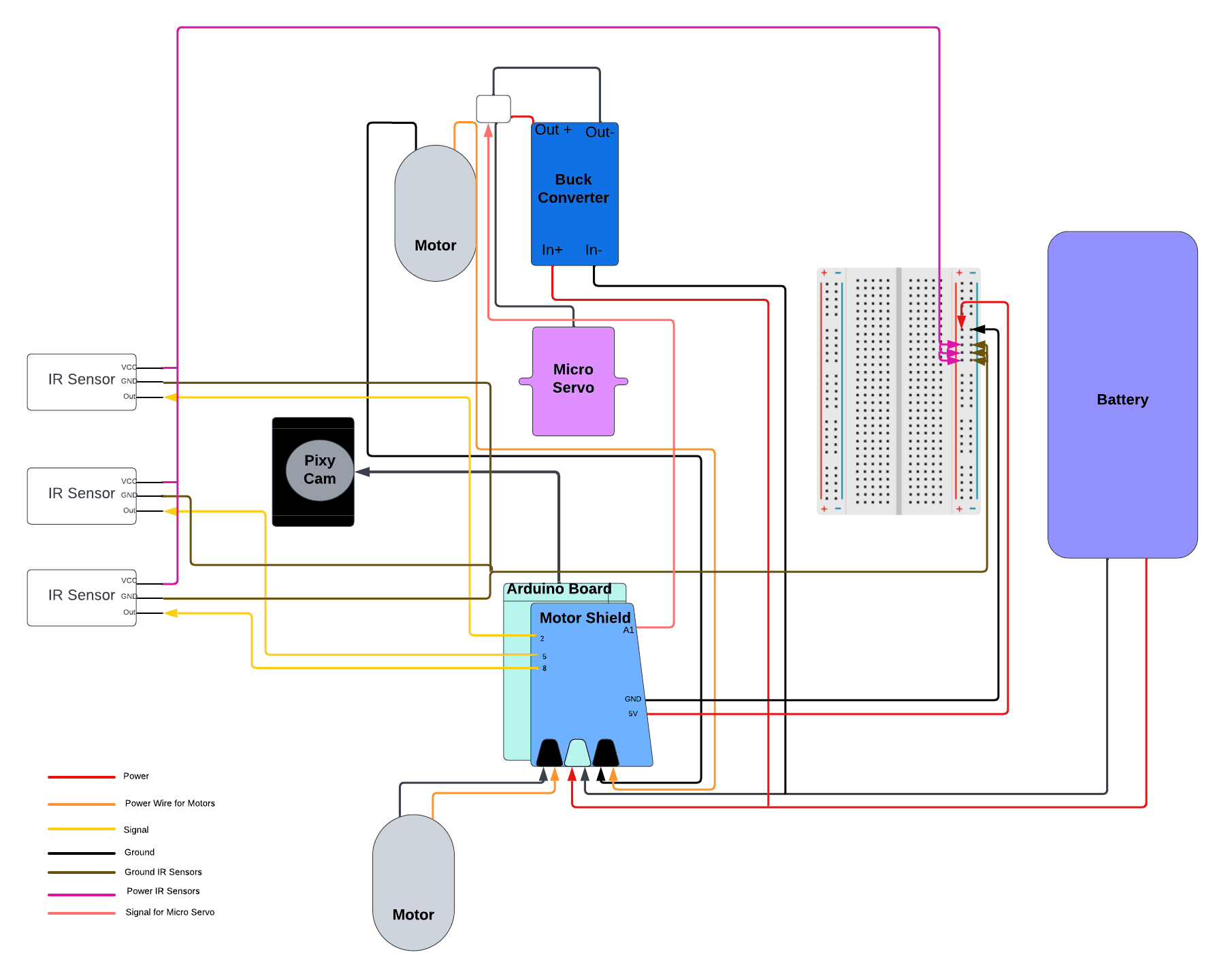
An Arduino Uno with a motor shield runs the show. It drives the two 47:1 gear motors, reads three IR sensors for line following, and talks to a Pixy2 camera for object detection. A micro servo actuates the claw, powered through a buck converter off the main battery.
The wiring diagram color-codes every loop (power, grounds, motor leads, and the separate IR-sensor and servo signals) so the rats-nest on the real rover could be assembled and traced without guesswork.
Control Algorithm
The code is a staged state machine. In the first stage, the rover follows the black line: if the outer IR sensors miss the tape it drives straight; if one catches the line it turns that way until centered. When all three sensors hit the line at once, it knows it has reached the end and advances to object tracking.
Tracking runs in stages of its own: spin to find the can, drive toward it using the Pixy2's reported width (distance) and x-position (centering), then close in and grab with the claw. We originally used switch/case states, but the program got stuck on a state; rewriting the same logic as nested if statements fixed it and the rover ran clean.
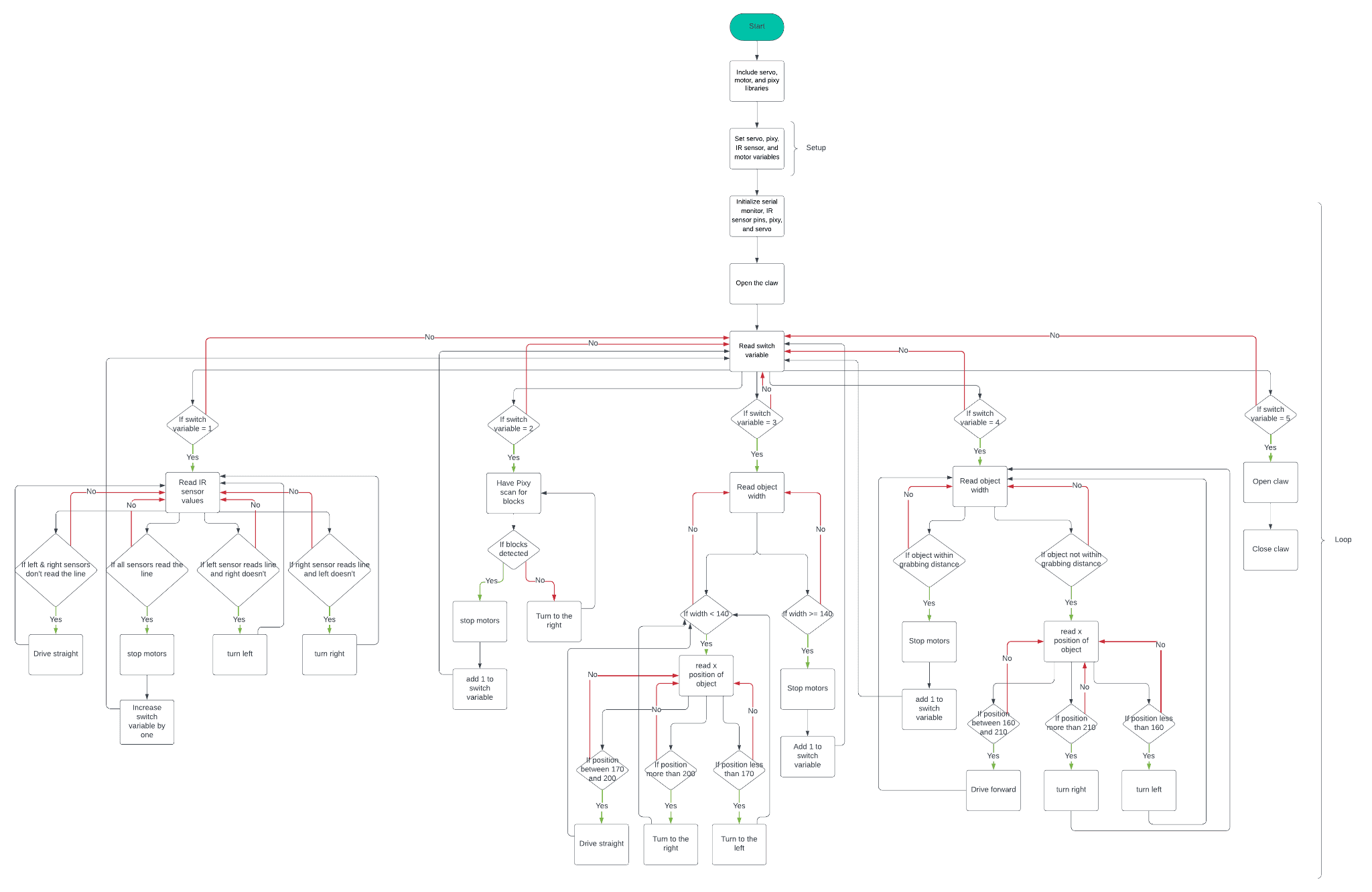 Full Algorithm Flow Chart
Outcome
The rover completed every aspect of the course (line following, object detection, and grabbing the can), running fully autonomously. It set a clean track time of 40.99 seconds.
That time wasn't competitive, and we're honest about why: the heavy claw meant we ran the motors at roughly half speed to spare the micro servo, and the Pixy2 occasionally lost the can, forcing the rover to spin and re-acquire it. Both were tuning problems we ran out of time to chase.
The real win was the claw itself. The concern going in was that a single micro servo couldn't drive the whole double rack-and-pinion mechanism, but it did, using just 22% of its travel, and the assembly proved rigid and durable. Getting a from-scratch, custom-geared mechanism to work in the real world was the most rewarding part of the project.
By the Numbers
~80 hrs · CAD & Fabrication Lead